In short:
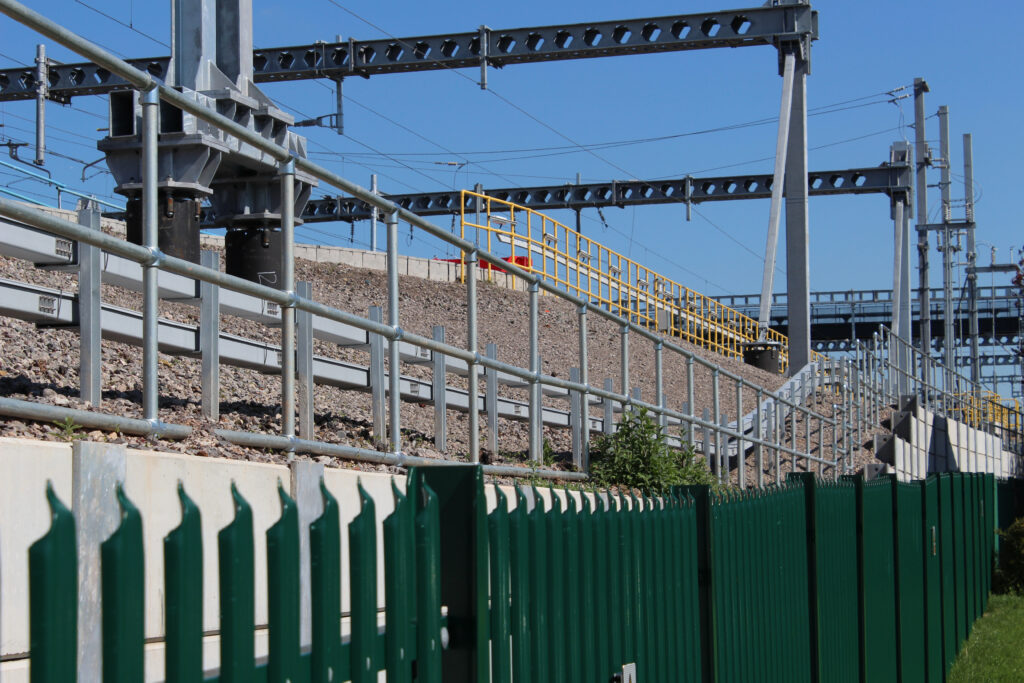
Steel handrails conduct electricity and corrode significantly faster in coastal, washdown, or chemical-heavy environments than dry, inland sites. This makes them unsuitable for use in electrically sensitive or corrosive environments. Glass Reinforced Plastic (GRP) handrailing, on the other hand, is naturally non-conductive and corrosive resistant, with an average lifespan of 25+ years. When you’re specifying a GRP handrail system, make sure you check compliance with BS EN ISO 14122-3:2001+A1:2010, confirm whether the fitting range suits your environment, and decide which installation method is right for your site.
Need to install a handrail in your rail, water, or utilities environment but not sure where to start? With so many options available, it can be difficult to know which material to choose, and how to go about specifying the right system for your site. If you get it wrong, you could be putting your workers’, and the public’s, safety at risk.
GRP handrailing is well suited to electrically sensitive and corrosive environments, and can be installed quickly with minimal disruption to your operations. Here’s what you need to check before specifying a GRP handrail system for your site.
Comparing steel vs GRP handrails in high-risk sites
GRP is far superior to steel in electrically sensitive and corrosive environments, due to its non-conductive and corrosion-resistant properties. Here’s how each material compares:
| Factor | Steel | GRP |
| Conductivity | Conducts electricity – you’ll need to earth and bond it near live rail, substations, or electrical plant | Naturally non-conductive, with no earthing required |
| Corrosion resistance | Can corrode significantly faster in coastal, washdown, or chemical-heavy environments | Naturally corrosion resistant, even in high-humidity and chemical-heavy environments |
| Weight | Heavier than GRP – you’ll need more manpower and plant to handle and install it | Up to 75% lighter than steel, making it much easier for your team to transport, handle, and install |
| Maintenance requirements | Will need regular repainting and recoating, plus earlier replacement, in harsh conditions | Minimal maintenance required, guaranteed lifespan of 25+ years |
| Installation method | May require welding or hot works, depending on which system you specify | Easy to install with a standard Allen key, no welding or hot works required |
Five things to check when specifying GRP handrails for your site
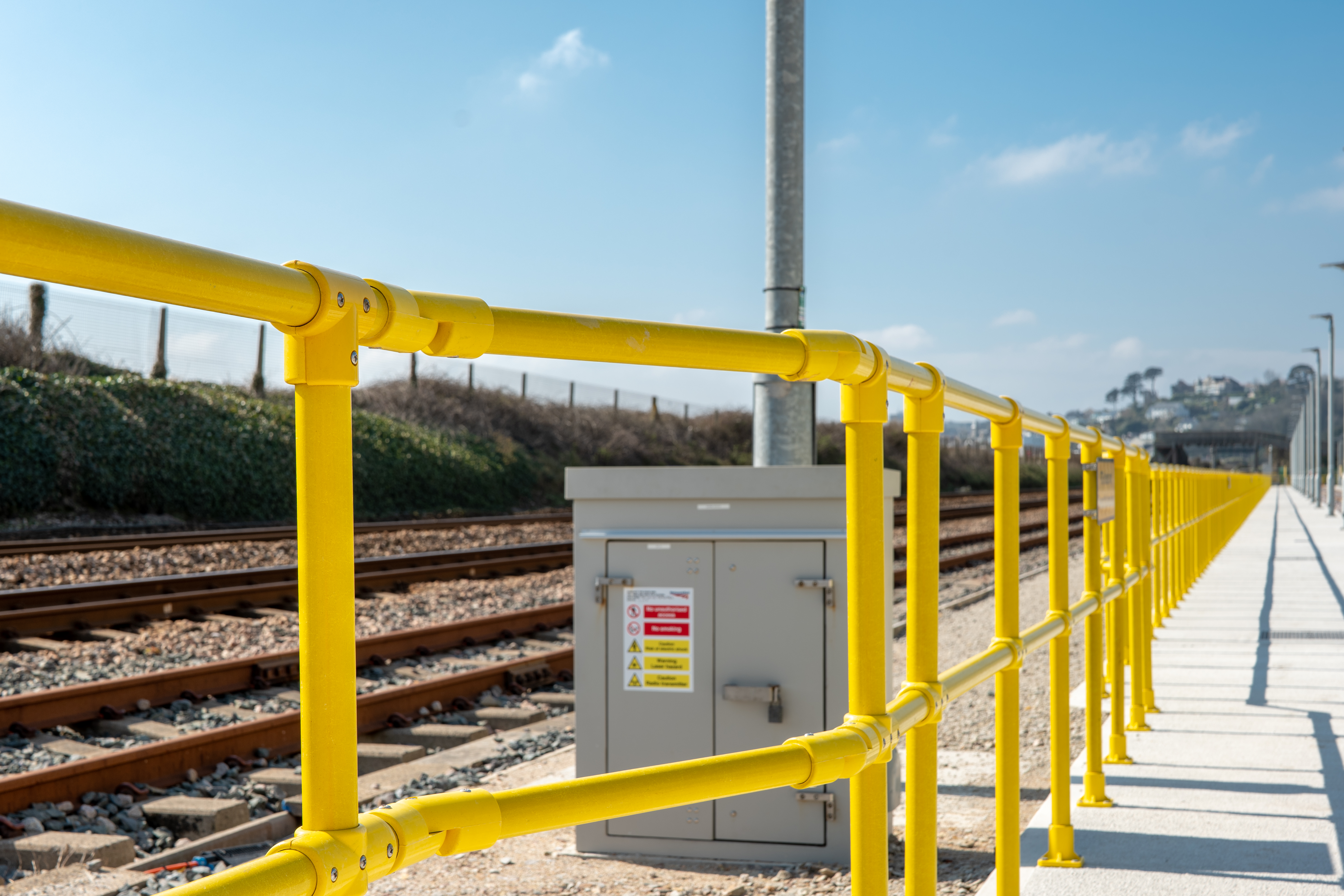
Choosing GRP over steel is the easiest decision you’ll make when specifying a handrail system for your rail, water, or utilities environment. The hardest part is getting the specification right, so that the system performs exactly as you need it to. Here’s what you need to look out for:
1) Compliance & certification
Make sure the range you’re purchasing is tested to BS EN ISO 14122-3:2001+A1:2010. If your site sits under sector-specific rules, like WIMES for water or RSSB guidance for rail battery depots, then check that the range has been specified against those too.
The Ezi difference: Our GRP handrails comply with all relevant British Standards, Building Regulations, and sector-specific rules, so you can rest assured that you won’t receive any penalties associated with non-compliance.
2) Configuration & layout
Check that the fitting range can be configured around your site’s actual layout, not just a standard straight run. It needs to work around any awkward corners, gradients, and existing structures – you don’t want to have to retrofit these later.
The Ezi difference: We offer 16 GRP handrail components, so we can configure a system around almost any layout your site throws at us, from tight corners to uneven gradients.
3) Fittings & installation method
Decide whether your run needs to be fixed into the structure or can be freestanding and non-penetrating. This is important if you’re working on roofs, membranes, or any other surface where drilling isn’t an option.
The Ezi difference: Our GRP handrails come with fittings that clamp together using stainless steel fixings. It can be quickly assembled with just a standard Allen key – no need for welding or hot works.
4) Finish & visibility
GRP handrails are usually supplied in safety yellow or to a specific RAL colour. If you’re working on a rail or utilities site, make sure that the finish meets any visibility requirements for the corridor or walkway you’re protecting.
The Ezi difference: Our GRP handrail systems are available in grey or yellow, but we also offer a wide range of RAL colour options if your site calls for something different.
5) Lead time
Check how quickly the fabrication can be turned around. This is especially important if your site has limited access or possession windows.
The Ezi difference: We can fabricate bespoke GRP handrails in as little as 3 days from order. That way, your access or possession window doesn’t get held up waiting on us.
Industry-leading GRP handrail systems for harsh environments
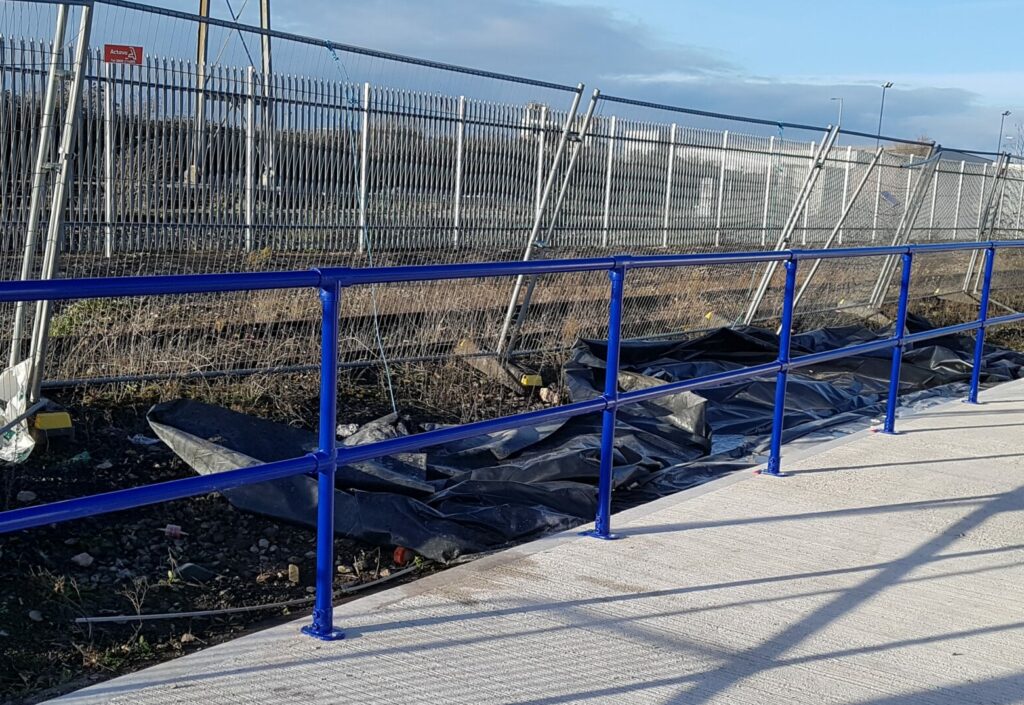
We’ve been designing and supplying modular GRP handrail systems for over 20 years, and rail, power and water infrastructure make up a large share of that work. We’re regularly trusted by some of the biggest names in these sectors, including Network Rail and Wessex Water, to provide solutions that perform safely next to live electrical equipment, and stand up to constant damp and chemical exposure.
Whether you’re working on an electrified rail corridor, a water treatment works, or a battery handling area, we’ve got a GRP handrail system to suit your needs. Simply send us your drawings or requirements and we’ll talk you through the available options.
FAQs
Do I need to earth GRP handrails near live rail or electrical equipment?
No. GRP is naturally non-conductive, so you don’t need to earth or bond GRP handrail systems near live track, substations, or electrical plants.
Are GRP handrails approved for Network Rail sites?
Yes, you can find many Ezi Klamp GRP handrails specified across Network Rail infrastructure. They remove the conductivity risk that steel introduces near electrified track.
How long will a GRP handrail system last compared with steel?
A GRP handrail system will last 25+ years with minimal maintenance on your part. Even when it’s galvanised, steel can corrode significantly faster in coastal, washdown, or chemical-heavy environments, so you’ll likely be repainting or replacing it well before that point.
Can I install a GRP handrail without welding or hot works?
Yes. You only need a standard Allen key to assemble our GRP handrail systems – there’s no need for welding or hot works whatsoever.
Are GRP handrails suitable for water treatment sites?
Yes. You’ll find our GRP handrail systems on numerous water treatment sites, thanks to its corrosion-resistant properties in high-humidity, chemical-heavy conditions.