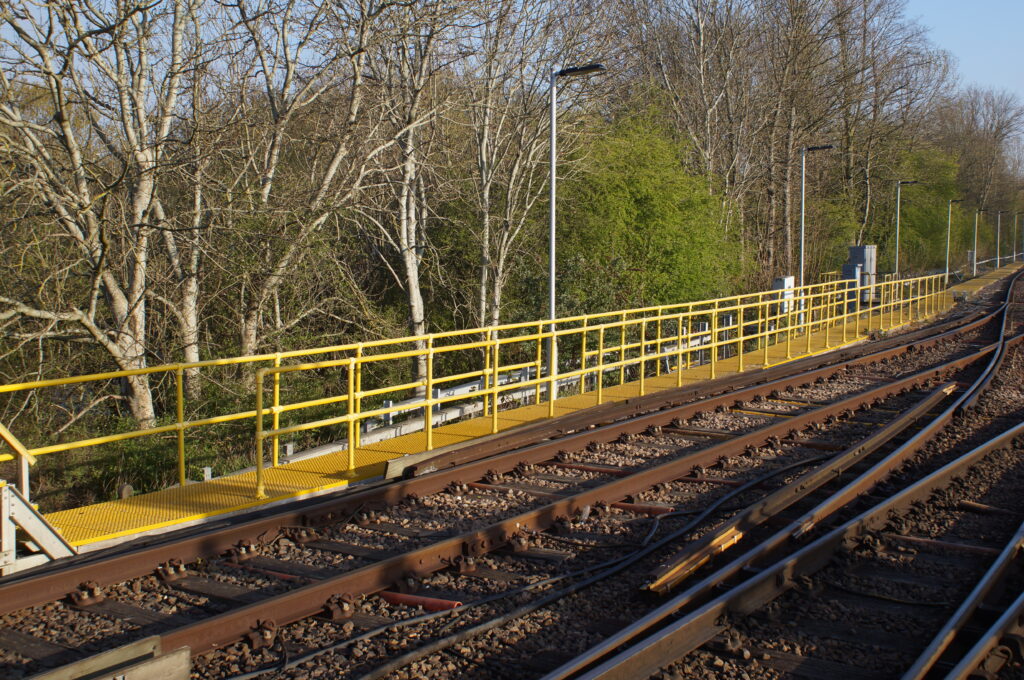
In short:
Are you responsible for the safety and performance of your depot? If so, it’s vital that your rail depot walkways actively reduce risk on site. That means carefully designing pit crossings, specifying the right slip resistance, ensuring effective lighting and drainage, and creating clearly defined driver walkway routes that protect your workforce from moving vehicles and fall hazards. GRP walkway rail systems have emerged as the ideal option, helping you safeguard your staff, demonstrate due diligence with the RSSB safety upgrades, and minimise disruption to your operations.
According to Network Rail, 24 people lost their lives in preventable accidents on UK railways between 1st April 2024 and 31st March 2025. Railway depots are fast-moving environments that present significant health and safety risks to both your workforce and the public. Therefore, it’s essential that you make the right choices when designing your rail depot walkways, as this could be the difference between a safe working environment and one that exposes your workforce to dangerous slips, trips, and falls.
The RSSB is continuing to place workforce protection at the forefront, so now is the perfect time to review how your rail depot walkways are specified and installed. Here are our 5 top tips on designing safe walkways for rail depots, so you can create safer, more durable access routes across your facility.
1) Prioritise safe pit crossings
Inspection and maintenance pits are essential within rail depots, but they also introduce a clear fall risk. If your pit crossings are poorly designed, you could be putting your drivers, engineers, and cleaners at risk, especially when they’re moving between rolling stock.
When specifying pit crossings, you must:
- Ensure that all crossings are clearly defined and positioned at logical access points.
- Use high-visibility, anti-slip materials to reduce the risk of slips and missteps.
- Provide compliant edge protection (where required).
- Avoid creating any trip points between the crossing panels and surrounding surfaces.
Our GRP walkways are increasingly used for pit crossings and depot access platforms because they are lightweight, corrosion resistant, and non-conductive. This is especially important in electrified rail environments where you need to ensure your personnel are protected against electric shocks.
2) Specify the right slip resistance
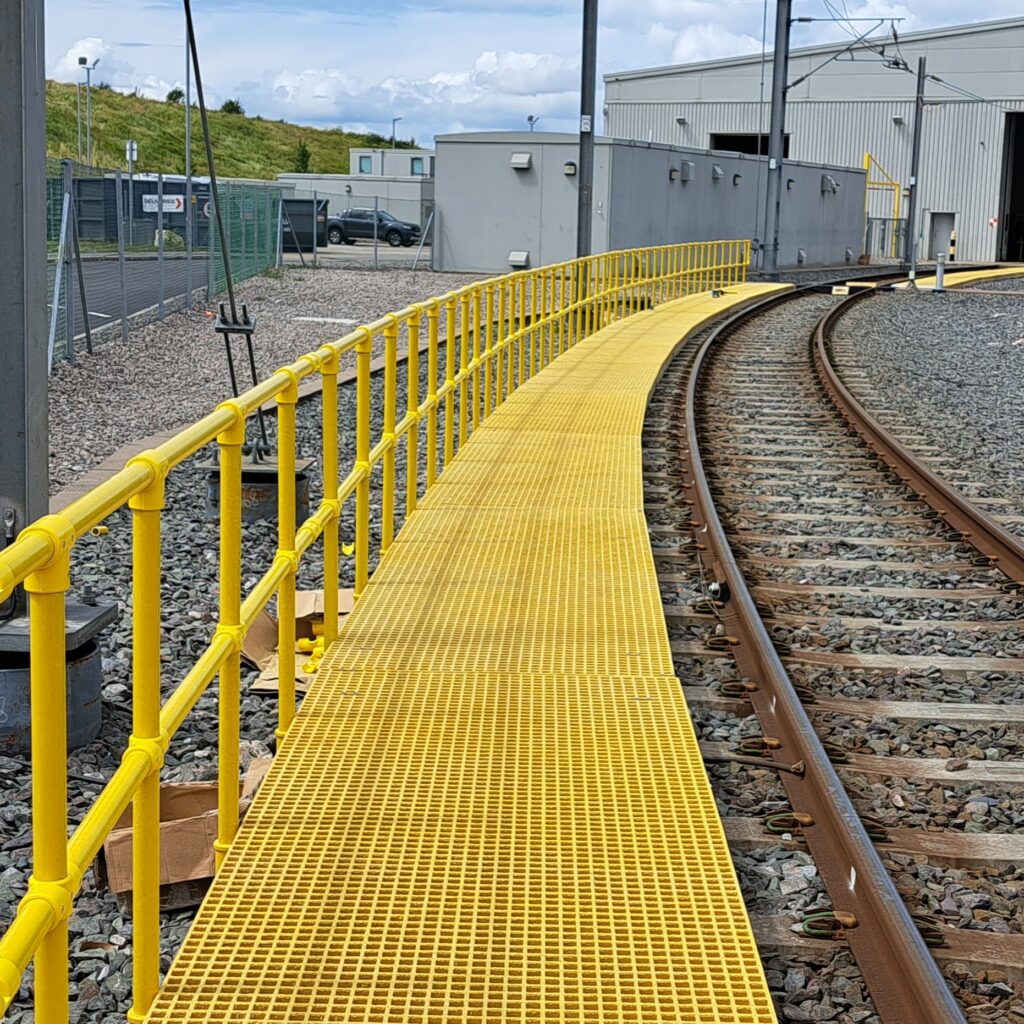
The SMIS (Safety Management Intelligence System) shows that slip, trips, and falls are the biggest safety risks faced by track workers. The presence of oil, water, brake dust, and general depot contamination can quickly make your surfaces hazardous if they’re not correctly specified.
Make sure you consider:
- What contaminants are likely to be present in your environment.
- The frequency and intensity of foot traffic in your depot.
- What cleaning and maintenance regimes you have in place.
Our GRP walkway rail systems feature integrated anti-slip surfaces to help your workforce maintain their grip in wet or oily conditions. Unlike steel, GRP does not corrode or polish smooth over time, helping to keep your team moving safely around your depot for a guaranteed 25+ years.
3) Clearly define your driver walkways
It’s essential that your driver walkways are clearly defined. Your drivers need safe, unobstructed access in order to prepare trains, carry out inspections, and dispatch services safely – often in low-light or early-morning conditions.
Ensure that your walkway design:
- Provides sufficient width for safe passing and task-based activity.
- Includes compliant handrails wherever there are changes in levels.
- Avoids any sharp level transitions and unprotected edges
- Is visually distinct from vehicle movement routes.
Our GRP walkway rail systems provide robust edge protection without adding any excessive weight to your depot surfaces. Our solutions are modular in nature, meaning they can be easily adapted or extended as your depot layout evolves.
4) Don’t forget about lighting
Even the best-designed depot access platforms can quickly become hazardous if they’re not lit correctly. Your depot likely operates around the clock, meaning your staff may need to work during darkness or in enclosed maintenance buildings with little light exposure.
Your depot lighting should:
- Eliminate shadows across depot walking routes and pit crossings.
- Provide uniform illumination across rail depot walkways.
- Highlight any changes in level, steps, and edges.
- Help to support safer inspection and maintenance work.
At Ezi Klamp, we work with you to ensure that lighting is integrated into every aspect of your walkway design; coupled with high-visibility GRP components to ensure that all edges and walking surfaces remain clearly defined at all times.
5) Incorporate effective drainage
The accumulation of surface water is one of the leading contributors to slip incidents within rail depots. If you don’t have adequate drainage on site, your surfaces can quickly become slippery and unsafe.
When designing drainage within your depot walkways, you must:
- Ensure that every surface is slightly graded to prevent standing water.
- Incorporate distinct drainage channels (where appropriate).
- Avoid creating low points where contaminants can collect.
- Select materials that will not degrade in wet environments (like GRP).
Our GRP grating panels are particularly effective when it comes to drainage. The open-mesh design allows water and debris to pass through, in turn reducing surface pooling. This makes them the ideal option for external rail depot walkways that are exposed to the elements.
Helping you design safer GRP access solutions
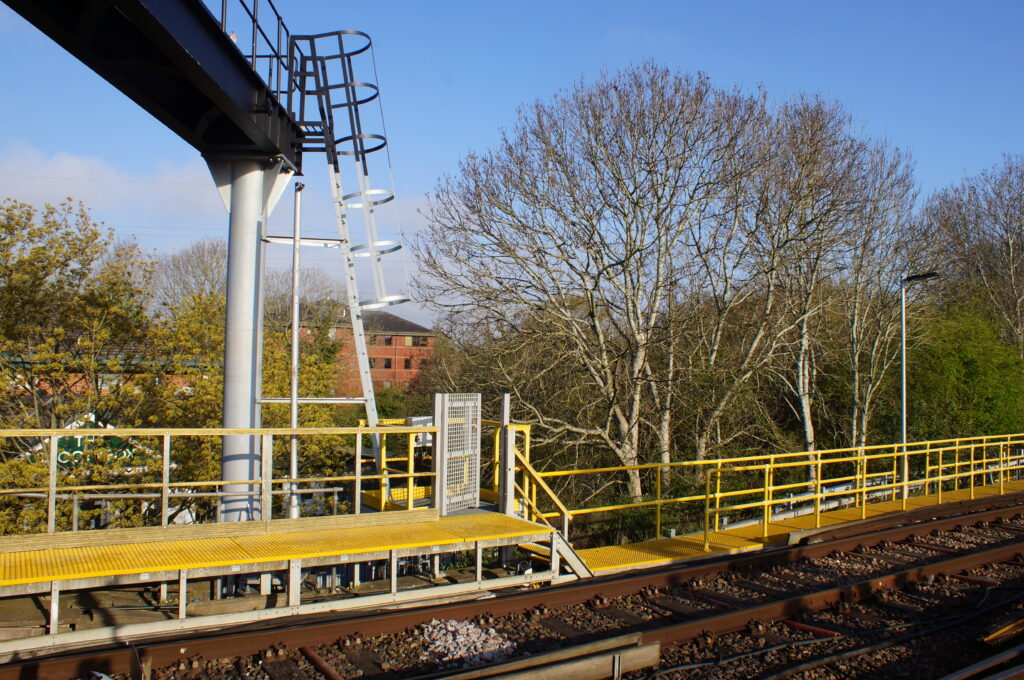
At Ezi Klamp, we’re proud to have supported the biggest rail clients (including Network Rail) for over a decade to help keep the UK safe and on the move. From design through to installation, we can help you develop compliant depot access platforms, pit crossings, and GRP walkways that are specifically engineered for your depot environment.
Our GRP systems are exceptionally lightweight, non-corrosive, and non-conductive, offering a lifespan of 25+ years with minimal maintenance required. They’re designed in line with relevant RSSB guidance and industry best practice for depot safety.
If you’re reviewing or redesigning your rail depot walkways, speak to our expert team today. We’ll help you develop a safer GRP access strategy that’s specifically tailored to your site.
FAQs
What are the main safety risks associated with rail depot walkways?
The main safety risks associated with rail depot walkways are slips, trips, and falls, particularly around pit crossings, elevated depot access platforms, and contaminated walking surfaces. Poorly defined driver walkway routes and inadequate lighting can also increase the likelihood of accidents.
Why is GRP commonly used for rail depot walkways?
GRP is lightweight, corrosion resistant, and electrically non-conductive, which makes it ideal for electrified rail environments. It can be manufactured with integrated anti-slip surfaces and requires minimal maintenance compared to steel, helping to keep your workforce safe and your depot operating smoothly.
What should I consider when designing a driver walkway?
A driver walkway should provide safe, unobstructed access for train preparation and dispatch activities. Your walkway must have sufficient width, compliant edge protection, appropriate lighting, and be clearly separated from vehicle routes.
How do RSSB safety updates affect depot walkway design?
The RSSB guidance continues to emphasise workforce protection, fall prevention, and improved visibility within operational environments. You must design your depot access platforms and walkways with these aspects in mind by incorporating suitable slip resistance, guarding, and safe access across pits and level changes.