Key takeaways:
Not sure which industrial flooring to choose for your site? GRP grating offers a safer and more cost-effective alternative to steel. It’s the ideal choice for a wide range of applications, from rail platforms and trackside walkways to heavy-duty industrial walkways and gantries. GRP is lightweight, slip-resistant, non-corrosive and non-conductive, which helps to keep your workforce safe and extend the lifespan of your infrastructure.
Did you know that slips, trips, and falls are the most common causes of non-fatal workplace injuries in the UK? As mandated by the Workplace (Health, Safety and Welfare) Regulations 1992, your floors and traffic routes must be suitable, in good condition, and free from hazards that could cause your workers to slip, trip, or fall – which is exactly where GRP grating comes in.
This comprehensive guide covers everything you need to know about the key GRP grating applications and benefits, so you can determine whether it’s suitable for your environment.
What is GRP grating?
GRP (Glass Reinforced Plastic) grating is a high-performance composite flooring system that’s manufactured by combining glass fibres with a thermosetting resin to form a rigid, open-mesh panel. The panel can then be cut and fabricated to suit the specific layout of your site.
GRP grating is available in a range of thicknesses (usually 25mm, 38mm, and 50mm), sizes, and surface finishes, so you can specify the correct panel configuration for both your structural and overall project requirements.
Typical GRP grating applications
GRP is an exceptionally versatile material, making it suitable for a wide range of applications. These include:
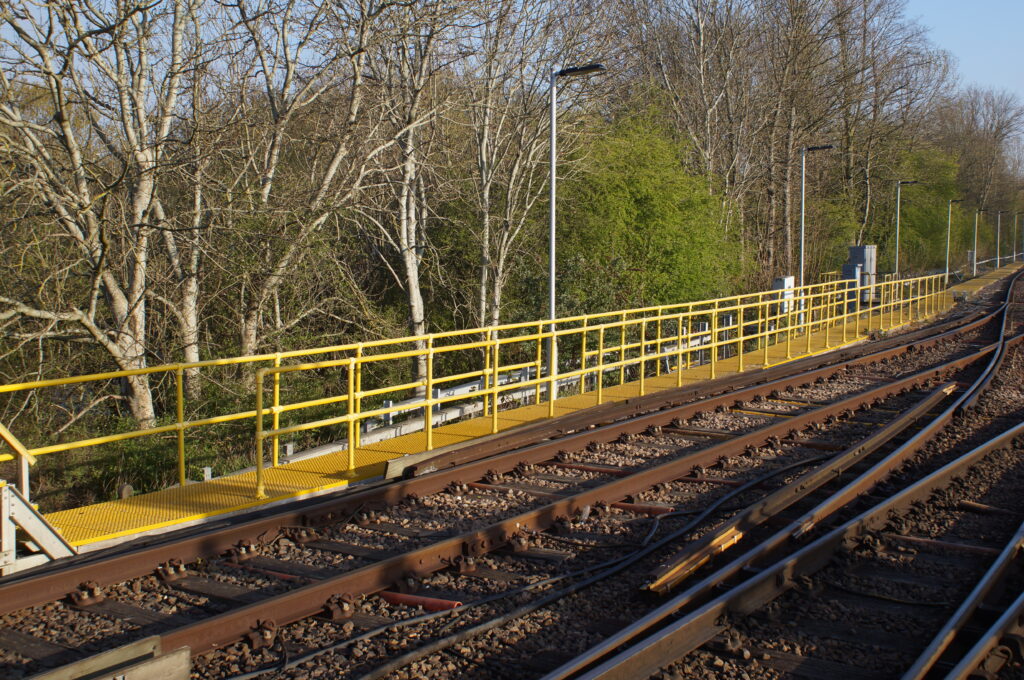
- Rail platforms and driver walkways
- Trackside access routes
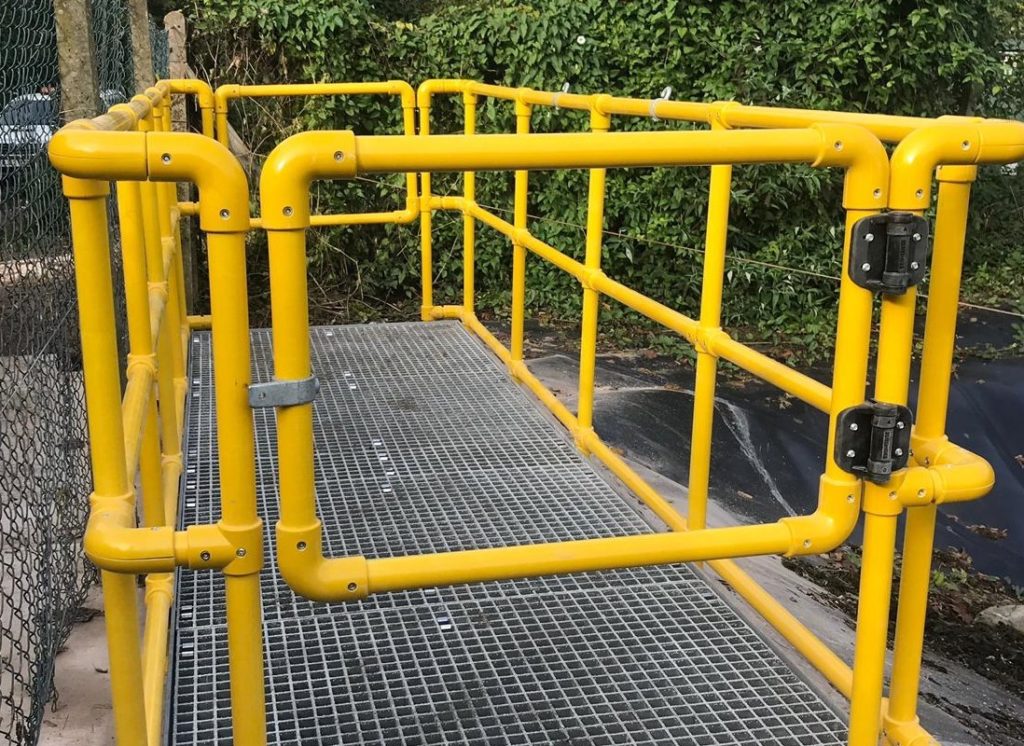
- Industrial walkways and gantries
- Mezzanine flooring
- Stair treads and landings
- Trench and drainage covers
- Riser void protection
- Offshore access systems
The open mesh design makes it particularly suitable for external walkways, elevated platforms, drainage areas, and process environments where water, debris, or spillages are often present.
Key GRP grating benefits
1) Slip resistant
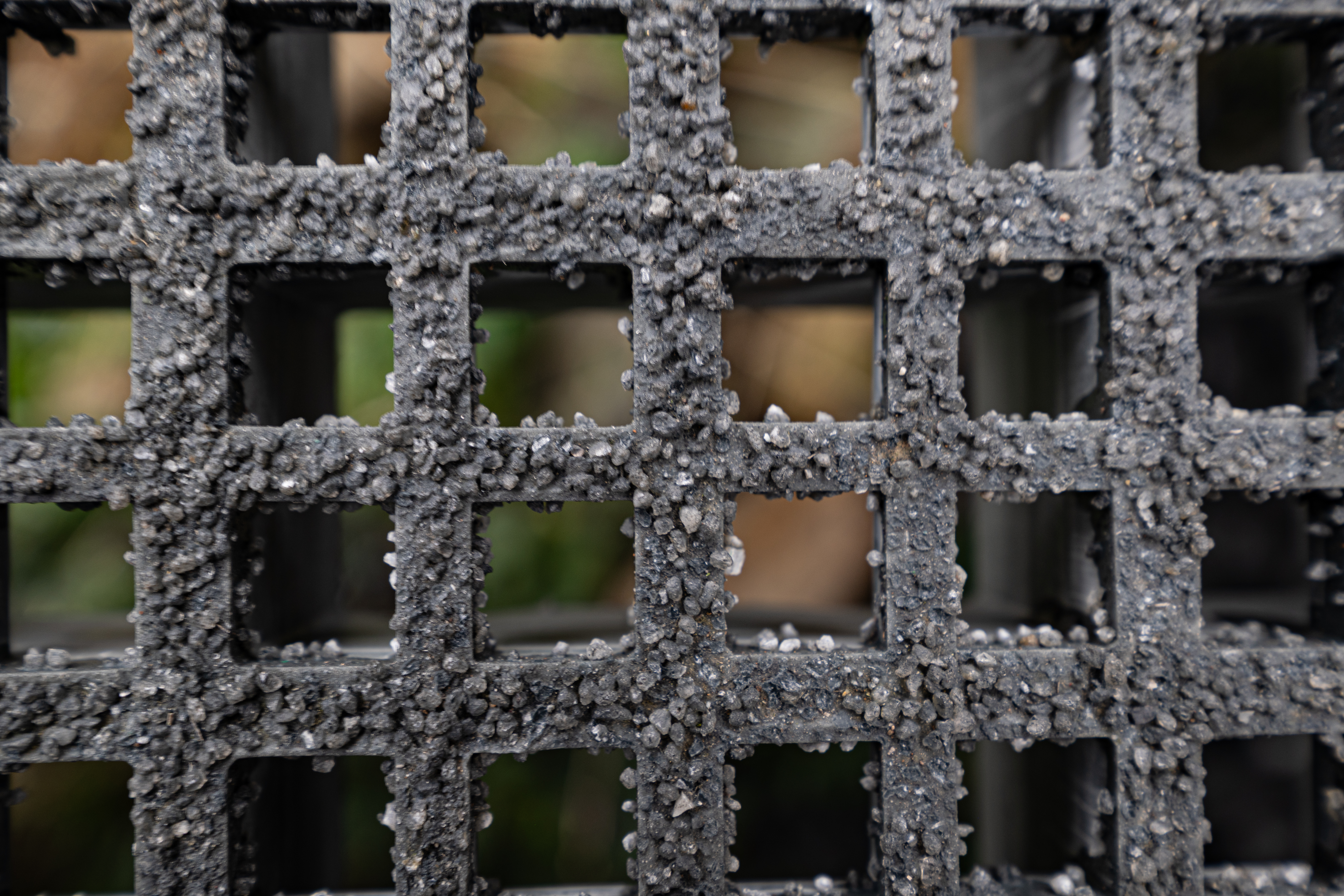
Need to reduce slip risk on your site? GRP grating offers the ideal solution. It’s manufactured with an integrated anti-slip surface (typically concave or grit-topped), meaning that the slip-resistant properties are built into the panel itself. Unlike steel grating, you’re not relying on secondary coatings that can easily wear away over time.
At Ezi Klamp, we supply grit-top non-slip grating that provides consistent grip underfoot, even in wet or oily conditions. This helps to reduce the likelihood of accidents by creating safer access routes across your site, in turn minimising downtime and the costs associated with potential claims.
2) Non-conductive
If your workers are operating around electrified infrastructure or high-voltage equipment, it’s essential that you specify a non-conductive grating material. Unlike steel, GRP does not conduct electricity, which reduces electrical hazards and prevents the need for additional safety measures like earthing.
Our industrial GRP grating is specifically designed for demanding electrified environments such as substations and rail infrastructure. It’s non-sparking and non-magnetic, helping to eliminate the risk of electric shocks and provide a safer underfoot surface for your maintenance team who are working in sensitive areas.
3) Corrosion resistant
Constant exposure to moisture, salt spray, or aggressive chemicals can quickly compromise traditional materials like steel. This corrosion weakens the structural integrity of the system over time, resulting in increased maintenance demands that can seriously impact both your budget and your operations.
Our GRP grating is naturally resistant to corrosion, making it suitable for use in hazardous environments such as water treatment works, coastal sites, and chemical processing plants. It’s also exceptionally easy to maintain, with no need for constant repainting or re-galvanising.
4) Strong yet lightweight
You need to ensure that your grating is strong enough to carry the loads you require, without being unnecessarily heavy. Having a high strength-to-weight ratio helps to reduce manual handling risks and makes installation much quicker – which is especially important in busy environments where downtime is a concern.
Our industrial GRP grating panels are exceptionally strong yet up to 75% lighter than steel, making them much easier for your teams to transport and install. This reduces the reliance on cranes or heavy lifting equipment and removes the need for hot works or on-site welding, helping to save you both time and money.
5) Durable
If you’re operating in a busy industrial environment, your flooring likely experiences heavy foot traffic and equipment loads, which could cause the system to fail. By choosing a durable grating solution, you avoid paying for expensive unplanned repairs and the disruption that comes with ongoing maintenance.
At Ezi Klamp, our GRP grating is engineered for long-term performance, even in demanding environments. It’s highly impact-resistant and maintains its structural integrity over time, giving you a reliable access solution you can depend on for a guaranteed minimum of 25 years.
Comparing GRP grating vs steel
| Feature | GRP grating | Steel grating |
| Corrosion resistance | Naturally resistant to rust and corrosion | Susceptible to rust, even when galvanised |
| Slip resistance | Integrated non-slip surface | Often requires additional treatments or coatings |
| Weight | Up to 75% lighter than steel | Significantly heavier than GRP |
| Electrical conductivity | Non-conductive | Conductive |
| Maintenance | Minimal ongoing maintenance | Requires regular inspection, repainting, and re-galvanising |
| Installation | Easy to install with no welding or hot works required | Often requires welding and heavy lifting equipment |
| Lifespan | Typically 25+ years | Can reduce significantly in corrosive environments |
Ready to specify GRP grating for your site?
If you’re reviewing your flooring materials or looking to improve safety on your site, get in touch with our expert team today. We’ll guide you through the specification process and ensure that your GRP grating suits your exact requirements.
FAQs
How long does GRP grating last?
When correctly specified and installed, GRP grating typically offers a lifespan of 25+ years. It’s totally resistant to corrosion and environmental degradation, meaning it maintains its structural integrity far longer than steel in harsh environments.
Is GRP grating suitable for heavy loads?
Yes, GRP grating is suitable for heavy loads, provided it is specified correctly. GRP grating is available in different thicknesses and mesh configurations to suit a variety of applications. You should always consult the load tables to determine allowable spans and deflection limits.
What makes GRP grating non-slip?
GRP grating is manufactured with integrated anti-slip surfaces (either concave or grit-topped finishes). These surfaces are built into the panel during manufacture, helping to provide long-term slip resistance rather than relying on coatings that could wear away over time.
Can GRP grating be used outdoors?
Yes, GRP grating is well suited to external environments because it does not rust or corrode in wet or exposed conditions. Its open mesh design allows water and debris to pass through, helping you maintain a safe walking surface.