Key takeaways:
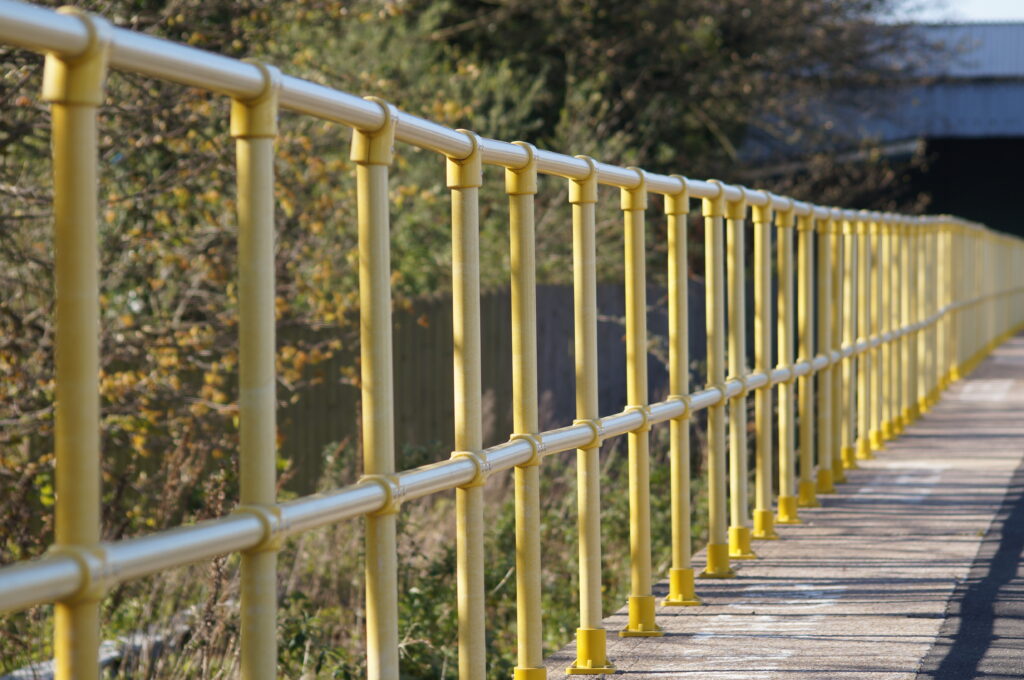
If you’re responsible for safety on a construction, rail, or industrial site, falls from height are probably your biggest risk. Most falls from height are preventable with the right edge protection, though. Handrail systems help to minimise accidents at your open edges, floor openings, stairwells, trackside boundaries, and site perimeters – without you having to rely on workers wearing or operating anything correctly. You need to specify compliant handrail systems that follow all relevant safety standards, and choose a modular system that can adapt as your site changes.
Did you know that falls from height accounted for around a quarter of workplace fatalities in 2025-26? Construction is one of the work-affected sectors, with a fatal injury rate of roughly 4.8x the industry average.
But most of these incidents are preventable if you have the right fall protection measures in place. Collective fall protection, such as guardrails and handrail systems, help to protect everyone who’s moving around your site, without having to rely on individual training or PPE.
We explore five common on-site safety hazards you’re likely facing right now, and explain how the right handrail system can help you prevent them.
1) Unprotected edges at height
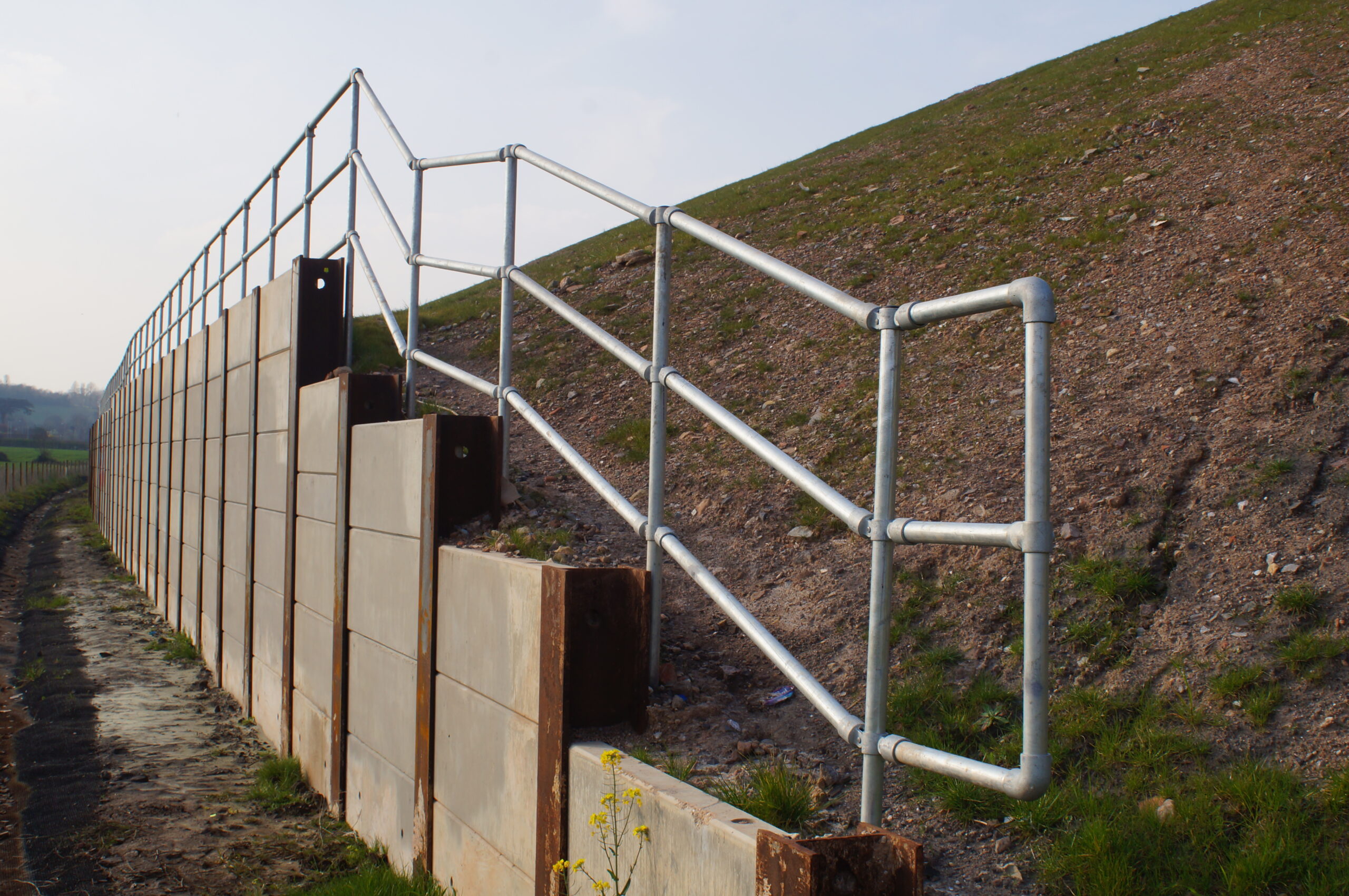
Roof edges, raised platforms, and mezzanine floors are some of the highest-risk areas on your site. The right handrail system helps to keep your workers safe when moving around these spaces and minimise the risk of fatal falls.
The risk: You could be exposing your workforce to open edges with a significant drop. A fall from this kind of height is far more likely to cause serious injury or death than a fall on the same level.
The solution: Specify a permanent or semi-permanent key clamp handrail system that’s designed to meet BS 6180:2011 – like ours at Ezi Klamp. Ensure the top rail is set at a minimum height of 950mm, and that there are no gaps wider than 470mm between the rails for anyone to fall through.
2) Floor and roof openings
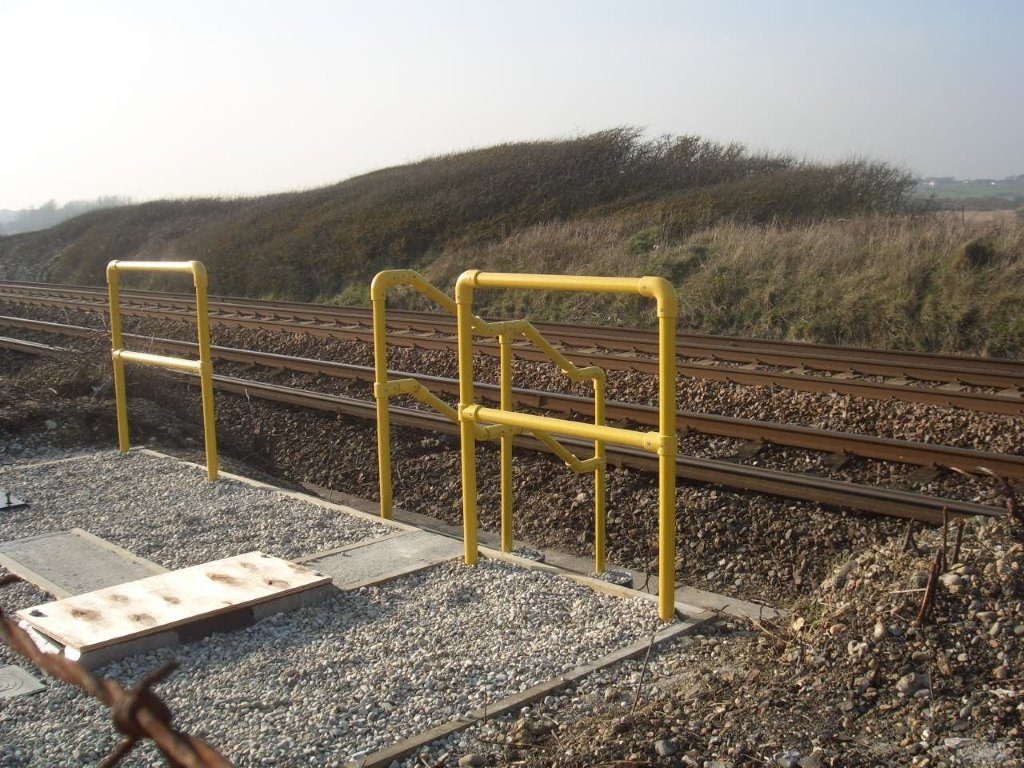
It’s easy to overlook hatches, service voids, and unguarded floor and roof openings. But these are still live fall hazards that could catch your workers out if the right barriers aren’t in place.
The risk: If an opening is left uncovered, even temporarily, your workers could easily step straight into it and fall through to the level below. This could result in a serious injury, or even death.
The solution: Fit a compliant guardrail around every floor and roof opening in your site, paired with toe boards when required. Our modular guardrails contain fittings that you can unlock and retrofit, allowing you to lift a section for access and then put it straight back. That way, the opening is never left unguarded for longer than it needs to be.
3) Stairwells and changes in level
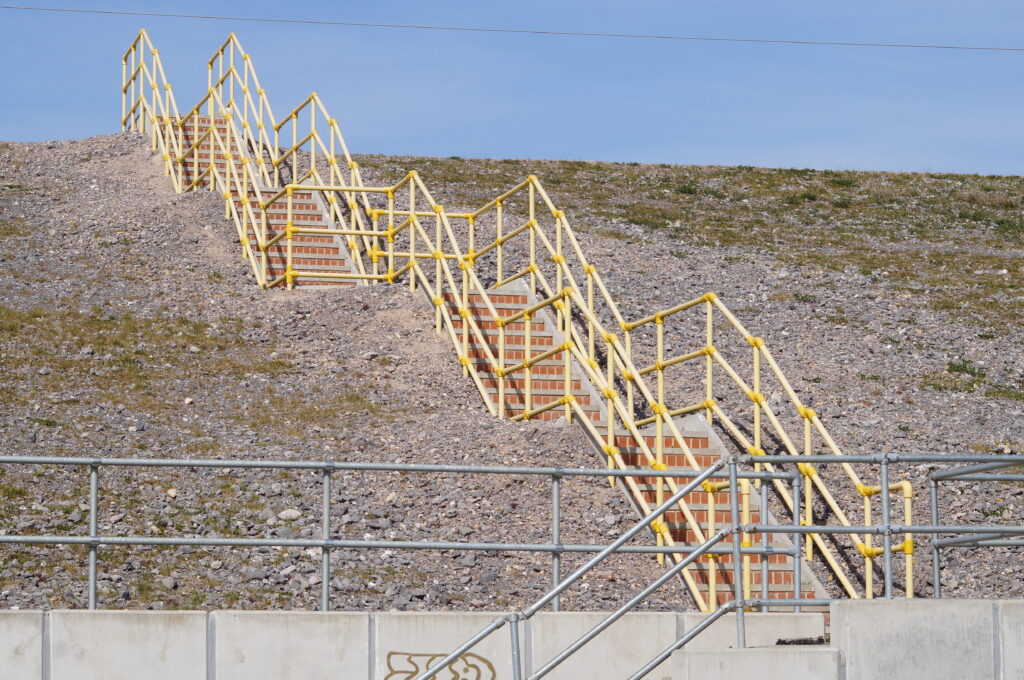
Your site likely features multiple steps, ramps, and changes in level. These areas are where trips and falls happen most often, so it’s vital to keep your workers protected as they ascend and descend.
The risk: Without a secure handrail, your team has nothing to hold onto if they lose their footing. If they stumble, they could fall down a full flight of stairs and seriously injure themselves. This risk is even higher if someone is carrying tools and can’t brace themselves.
The solution: Install a key clamp handrail system that runs continuously along every stair flight and change in level. Make sure the rail extends past the top and bottom step, so that your workers have something to grip on their approach. We can help you choose the right fittings and rail runs for your stairs to ensure they’re safe and compliant.
4) Trackside and embankment edges
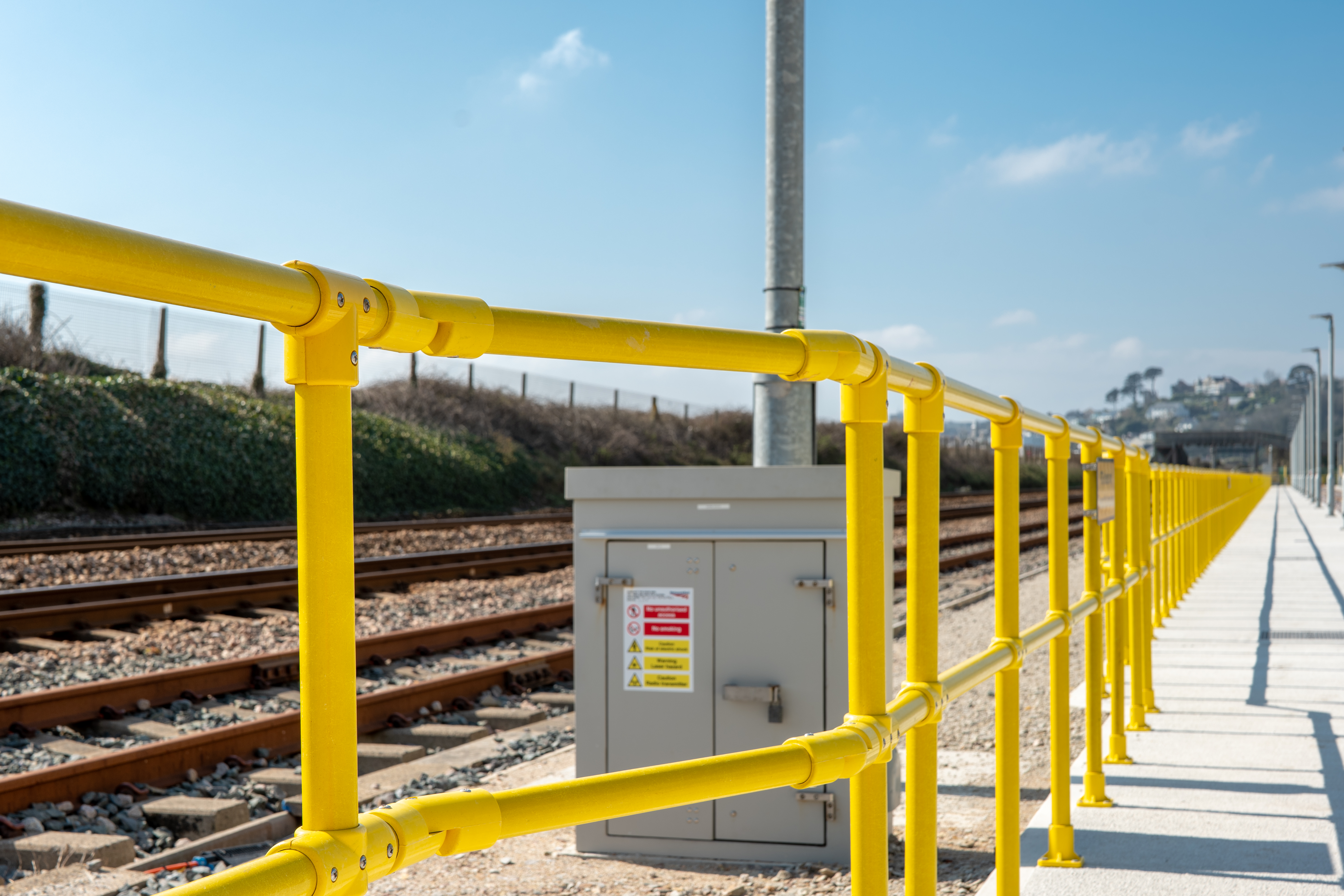
Rail sites present a unique set of safety hazards. Embankments, bridges, and trackside boundaries are some of the highest-risk areas on these sites, and you only have short possession windows to get edge protection installed before the line reopens.
The risk: If there’s no handrail present and your workers fall down an embankment or a bridge, then they could sustain serious injuries – especially if the ground drops away sharply below. You’re also putting yourself at risk of track incursions near live rail.
The solution: Choose our key clamp handrail system for your trackside or embankment areas. The system can be installed without welding or hot works, so you’re not held up waiting for permits. They feature adjustable elbows and swivel joints that follow any sloped or uneven ground on your site, so you don’t need to force the terrain to fit a rigid system.
5) Site perimeters and pedestrian routes
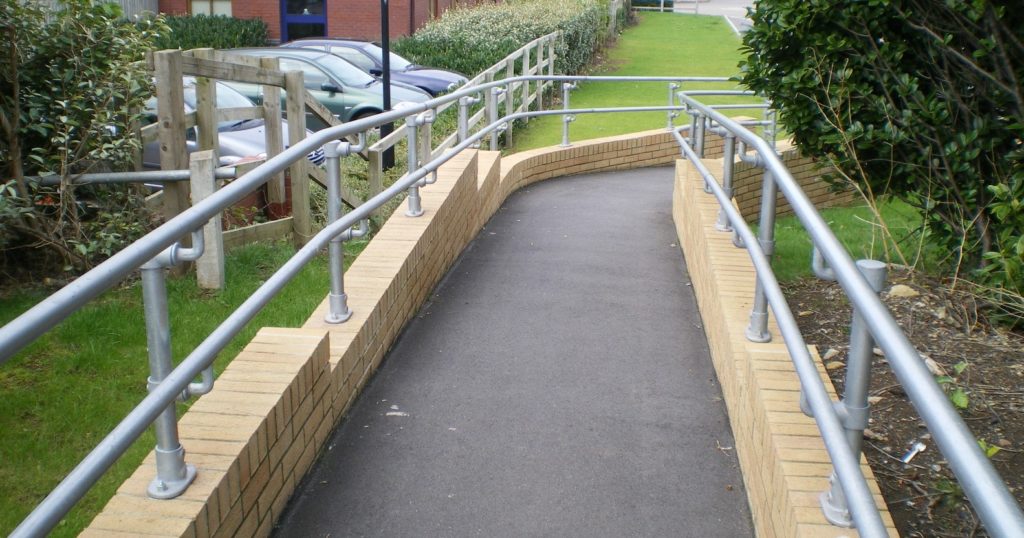
If your pedestrians, vehicles, and plant are sharing the same space, then you need a clear physical boundary between them. Relying on people to judge the gap themselves isn’t a safe way to manage these routes.
The risk: Without a physical boundary in place, someone on foot could easily step into a vehicle route or unload area without realising. A collision with plant or a moving vehicle is more likely to be fatal than other on-site incidents.
The solution: Install a pedestrian guardrail system to mark a visible line between vehicle routes. If you’re protecting people against vehicle impact, opt for our Armco-type crash barriers instead. They’re designed to absorb and redirect the energy of a moving vehicle, keeping it away from people and structures instead of just marking where it shouldn’t go.
Protect your people and your equipment with Ezi Klamp’s barrier systems
At Ezi Klamp, we offer a range of handrails and barrier systems that are specifically designed to solve your on-site safety challenges.
Our GRP handrails, key clamp handrails, DDA handrails, roof guardrails, pedestrian guardrails, and Armco-type barriers help to keep your workers safe as they navigate around your site, with minimal disruption to your operations. They’re designed to meet all relevant British Standards and The Work at Height Regulations 2005, so you can rest assured knowing that your site is compliant with all the required safety standards.
Not sure which handrail system is right for you? Our experts will take the time to assess your site and help you choose the right specification for your environment. Get in touch to discuss your requirements.
FAQs
Do handrails need to meet a specific safety standard?
Yes, handrails and guardrails need to meet specific safety standards. You’ll typically reference BS 6180:2011 for barriers in and around buildings, and BS EN ISO 14122-3:2016 for permanent means of access on industrial sites. If you’re working in a rail environment, then you may need to reference additional standards depending on the asset.
Are key clamp handrails suitable for rail sites?
Yes, key clamp handrails are suitable for use on rail sites. They provide collective edge protection around trackside and edges, and can be installed without welding or hot works to help you make the most of short possession windows. You can also adapt them to suit your embankments, bridges, and confined trackside areas.
How high does a handrail need to be on a construction site?
As per The Work at Height Regulations 2005, your top guardrail must be at least 950mm above the surface a person is working on, measured from the edge they could fall from (or 910mm if it’s an existing installation). You must also ensure that there are no gaps exceeding 470mm between the rails.
Can a handrail system be adapted if site conditions change?
Yes, our modular key clamp handrails can be easily adapted if conditions change. You can extend, reposition, or reconfigure the system on-site without specialist equipment, which is useful if your layout evolves during the project.