In short:
When specifying a modular access system for your environment, you need to consider where it’s going, what conditions it needs to withstand, and how your site might change over time. Choose a material that suits your environment, make sure it’s built to the relevant British Standards, and confirm whether it can be reconfigured if your layout changes. GRP access platforms and GRP structures are ideal for most sites, thanks to their lightweight, durable, corrosion resistant and non-conductive properties. If you’re not sure where to start, request a free take-off from drawing from Ezi Klamp. Our On Site and Right guarantee means it’s our responsibility to get your system right.
Did you know that 126 workers were killed in work-related accidents in 2025/26? Falls from height caused almost a quarter of these deaths, with being struck by a moving vehicle or object following close behind.
If you’re signing off on an access system for your site, you’re responsible for keeping your workforce safe. Get the specification wrong, and the risk of serious injuries or fatalities increases dramatically.
Here are the questions you need to answer before you specify GRP access platforms, structures, or stairs for your site – and how we can help you get it right.
1) Choose the right material for your environment
It’s important that your choice of material matches your site, not the other way around.
Steel is the most familiar material and it’s sometimes cheaper to purchase upfront. However, it corrodes up to 10x faster in coastal environments than inland environments, and you’ll need to earth it near electrical plant.
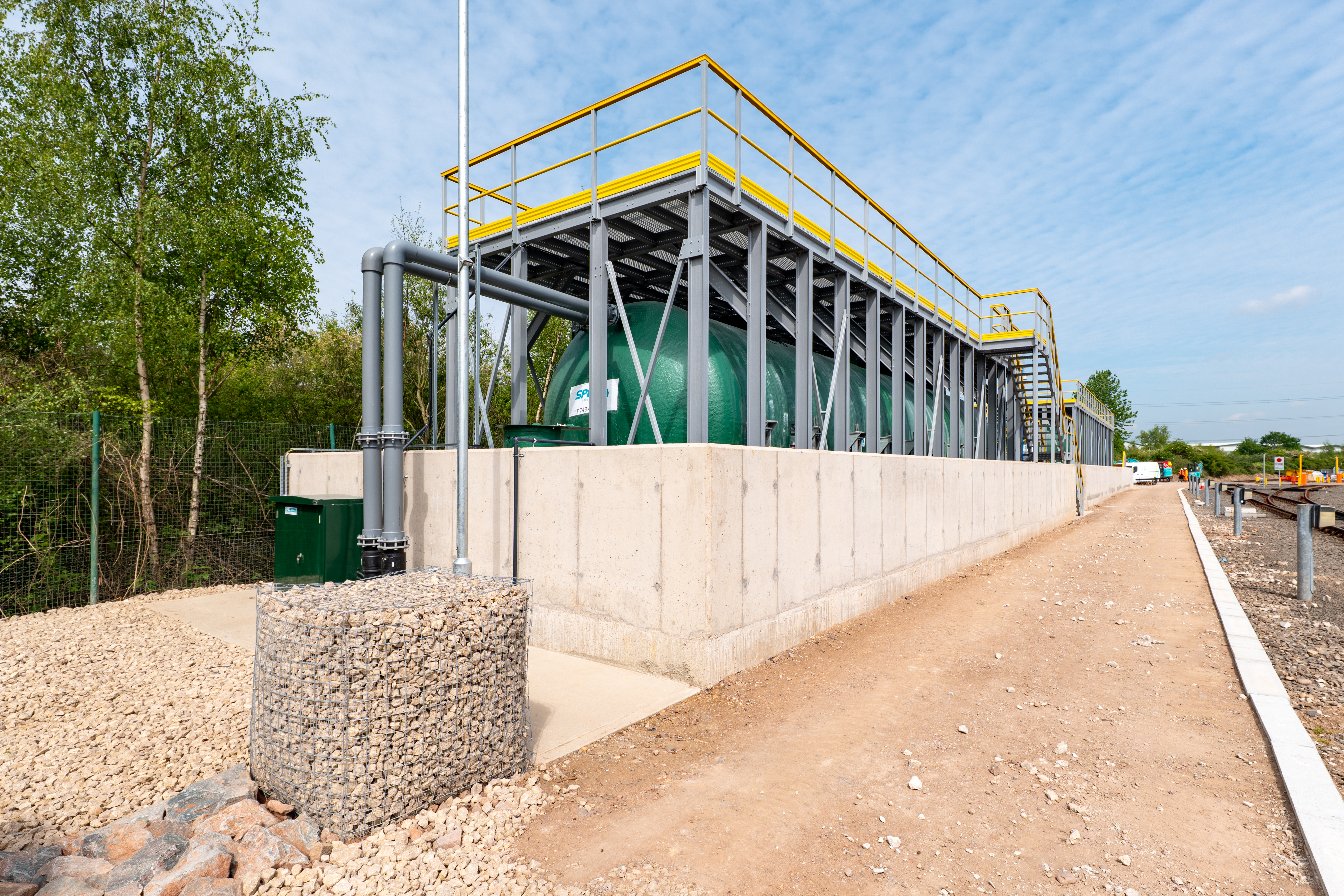
Our Glass Reinforced Plastic (GRP) access structures are the ideal choice for coastal sites, wastewater treatment works, battery depots, and any other sites with live electrical equipment. Here are just some of the benefits of GRP:
- Naturally resistant to corrosion
- Non-conductive and non-sparking
- Up to 75% lighter than steel
- Average lifespan of 25+ years
- Minimal maintenance required
- Whole-life cost is typically lower than steel
2) Match your structure to the standard
Once you’ve selected your material, you’ll need to check that the system is compliant with the relevant British standards. These are:
- BS 5393-1:2010 and BS EN ISO 14122-3:2016 for GRP access stairs
- BS 4211:2005+A1:2008 and BS EN 14396:2004 for GRP ladders
- BS EN ISO 14122-2:2016 for GRP platforms and walkways
- BS EN 13374:2013+A1:2018 for guardrails or edge protection on your structure
In line with accessibility requirements under the Equality Act 2010 and relevant building regulations, the handrail height on your stairs will need to sit between 990mm and 1.1m, extending the width of one tread and leveling out for at least 300mm at the top and bottom.
Your sector also adds another layer of complexity. If you’re operating within one of the following sectors, you’ll have additional compliance requirements:
At Ezi Klamp, our access systems are designed to comply with the relevant British Standards and sector-specific requirements, helping to reduce the risk of non-compliance.
3) Plan for how your site might change
Your site will likely change over time, so it’s important that you can reconfigure or extend your structure to match your evolving requirements. Here’s what to check before finalising your specification:
- Map out how your site is used today, and how it’s likely to change over time. New equipment or plant, changing production lines, and new vehicle or pipeline routes can all change what your structure needs to do.
- Specify modular key clamp fittings for your handrails, rather than having a fixed, welded structure. We have 60+ types available, so you can easily extend, relocate, or reconfigure your structure later without cutting or re-welding it.
- Opt for our freestanding, non-penetrating guardrails and walkways if your structure is sitting on a roof or floor that you can’t drill into. This will ensure that you protect the warranty underneath.
- Confirm your installation method upfront. Our access structures are assembled with a standard Allen key, so you can install the system around your live site without worrying about obtaining a hot works permit or undergoing an operational shutdown.
4) Get your specification right with Ezi Klamp

Still need help specifying a modular access system for your site? You don’t have to work through all this on your own.
Simply send us your drawings and we’ll review them through our free take-off from drawing service. We’ll then identify the safest, most compliant structure for your site before anything moves into fabrication. Every take-off is tailored to the operational requirements of your project, helping to ensure the most suitable solution from day one.
And if we ever get your take-off or specification wrong, we’ll put it right at our own cost as part of our On Site and Right guarantee. That way, the responsibility doesn’t solely lie with you – we’re here with you every step of the way to ensure the system is right for your site and performs as intended.
Ready to get started? Discover more about our modular GRP access systems, and then get in touch to discuss your requirements.
FAQs
What’s the difference between GRP access platforms, GRP access stairs, and GRP access structures?
Your GRP access platform is the standing or working surface itself. Your GRP access stairs then connect platforms at different levels. GRP access structures are the broader term covering the platforms, stairs, ladders, walkways, and handrails that are combined into one fabricated system for your site.
Do GRP access stairs need to comply with the same standards as steel stairs?
Yes. Standards such as BS 5393-1:2010, BS EN ISO 14122-3:2016, and Part K Building Regulations apply regardless of the material. You’ll need to ensure that your GRP access stairs meet the same tread, handrail height, and load requirements specified in these standards.
How long do GRP access platforms typically last?
Most GRP access platforms last 25 years or more with minimal maintenance on your part. Some GRP grating and platform systems can achieve service lives of 45-50 years, depending on the operational environment and specification.
Can GRP access structures be installed near live rail track or electrical equipment?
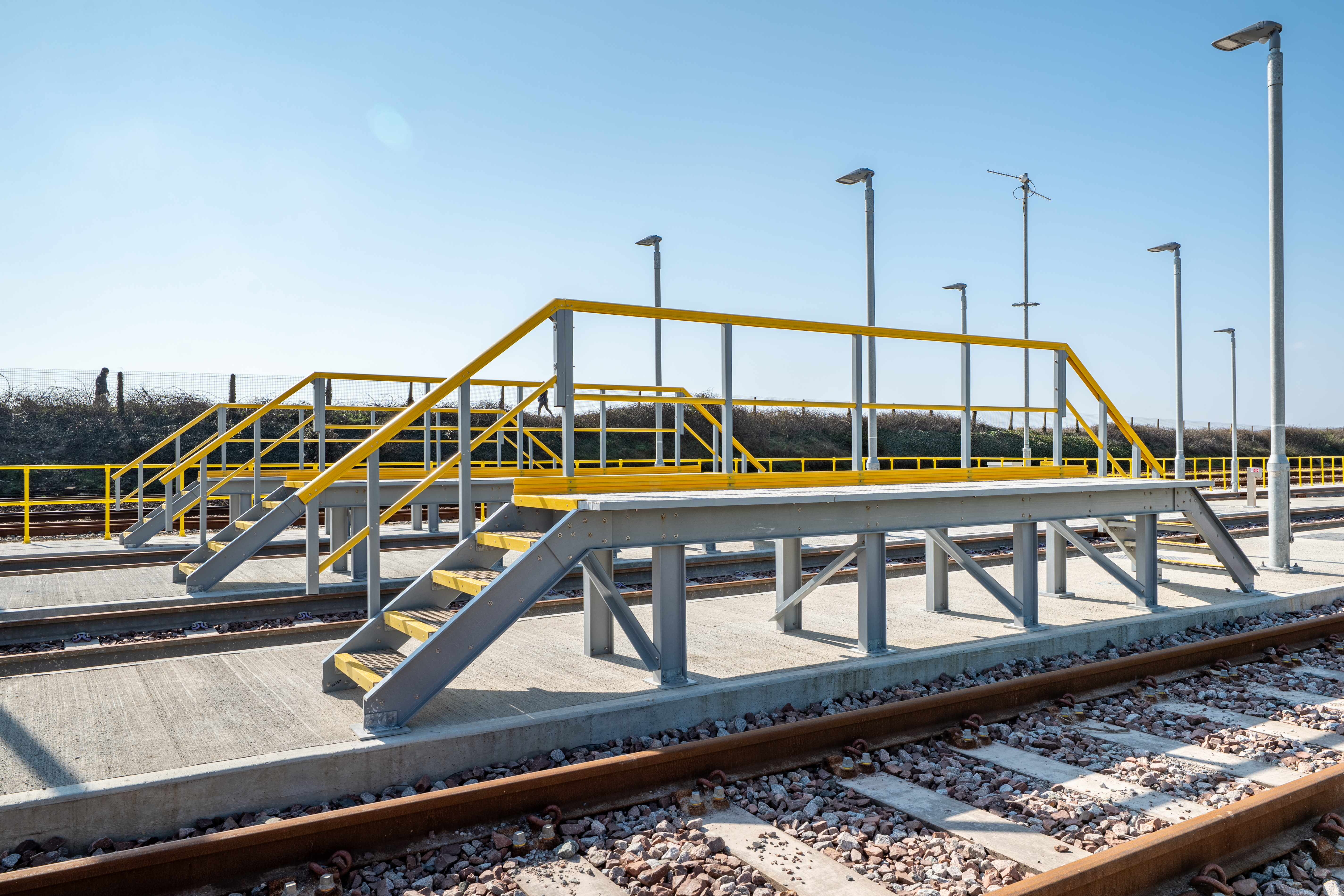
Yes. GRP is naturally non-conductive and non-sparking, which makes it ideal for use on rail platforms, battery depots, and sites with live electrical plant. Steel would need earthing in these environments, adding extra time and cost to your project.
Is GRP more expensive than steel for access platforms and stairs?
The upfront cost of GRP and steel systems is often comparable, depending on project requirements. However, when you take into account GRP’s corrosion resistance, lack of earthing requirements, and lower maintenance needs, the whole-life cost of GRP is typically lower than steel.