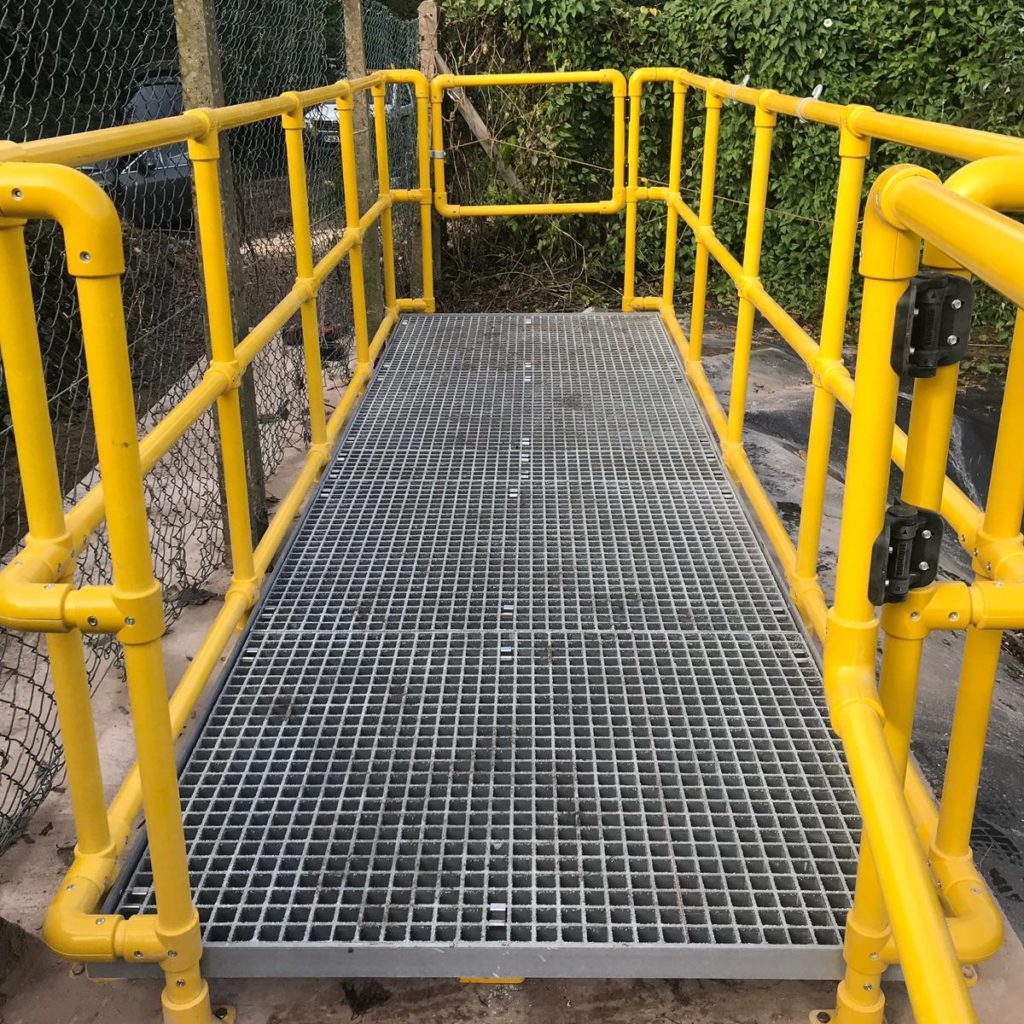
In short:
Coastal and marine environments are frequently exposed to saltwater, moisture, and UV, which presents significant challenges for traditional access structures made from materials like steel. GRP marine platforms provide a superior alternative to steel, thanks to their corrosion resistance, UV stability, and slip-resistant surfaces. They require minimal maintenance and offer a lifespan of 25+ years, helping to reduce lifecycle costs and minimise downtime in busy harbours, coastal treatment works, and offshore facilities.
Did you know that steel corrodes up to 10 times faster in coastal environments than in dry or inland environments?
Saltwater spray, persistent moisture, strong winds, and constant UV exposure can quickly accelerate the deterioration of traditional materials like steel, which increases the time and cost involved in maintaining the infrastructure. Over time, this can place significant pressure on your budget and lead to costly downtime.
GRP marine platforms have emerged as a superior alternative to traditional structures, offering a durable, corrosion resistant, and low-maintenance solution that’s designed specifically for harsh marine environments. Here’s why you should consider our GRP marine access systems for your coastal or offshore environment.
The benefits of GRP platforms in coastal and marine environments
Resists saltwater corrosion
One of the biggest challenges for coastal infrastructure is corrosion, thanks to the constant presence of saltwater, sea spray, humidity, and moisture. Steel structures often need protective coatings, galvanisation, and regular repainting to slow down the corrosion process – and even with those measures in place, you’ll still need to pay for regular inspections and ongoing maintenance.
Our GRP platforms offer a far more durable solution. GRP (Glass Reinforced Plastic) is naturally resistant to corrosion, meaning it does not rust, oxidise, or degrade when exposed to seawater. It lasts for a minimum of 25 years even in coastal and marine environments, meaning you won’t need to budget for significant replacement or corrosion-related maintenance costs.
Offers long-term UV resistance
In addition to saltwater, coastal structures are exposed to prolonged sunlight and UV radiation. This exposure can cause protective coatings and untreated metals to fade, weaken, or become brittle over time.
Our GRP systems are manufactured using specialised resins and protective surface finishes that are designed to withstand long-term UV exposure. This ensures your platform maintains its structural integrity and appearance, even in exposed coastal environments – helping to keep your workforce safe with minimal downtime.
Integrated slip-resistant surfaces
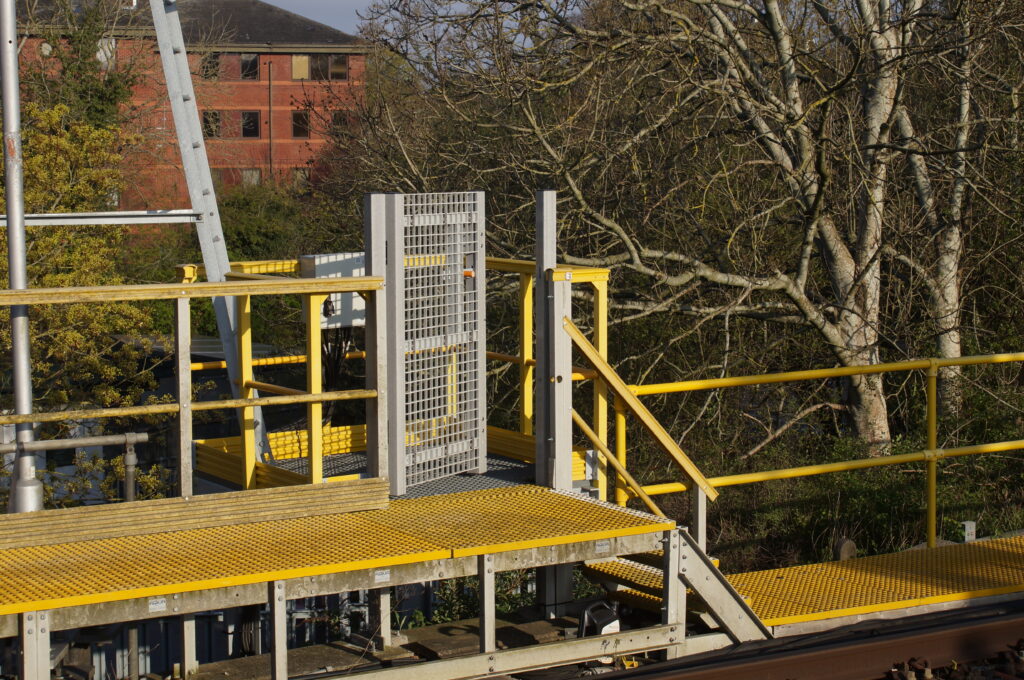
Wet conditions are unavoidable in marine and coastal environments. Sea spray, rain, and algae growth can quickly make your access routes slippery if the surfaces have not been designed with safety in mind – increasing the likelihood of dangerous slips, trips, and falls.
Our GRP marine platforms feature anti-slip GRP grating, helping your team to maintain traction even in wet conditions. The open mesh structure of GRP grating allows any surface water to drain away quickly, reducing the presence of standing water and keeping your walking surfaces safe.
Requires minimal maintenance
Although GRP is sometimes more expensive to purchase upfront than traditional materials like steel, you’ll save more money in the long term. If you opt for a steel platform, you’ll need to budget for regular inspections, repainting, corrosion repairs, and component replacements.
On the other hand, our GRP platforms require very little maintenance. Because the material does not rust or deteriorate in saltwater environments, you won’t need to worry about paying for ongoing maintenance work. This brings down the cost of ownership and ensures your business operates smoothly with minimal downtime.
Lightweight yet strong
GRP marine platforms also offer excellent strength-to-weight ratio, providing strong structural performance at up to 75% lighter than steel. This makes our GRP structures much easier to transport, handle, and install – which is especially useful if your site is in a remote or difficult-to-access coastal location.
Although they are lightweight, GRP platforms are still structurally robust and capable of supporting heavy loads. This helps to keep both your workforce and your equipment safe when carrying out maintenance or operational tasks.
Common uses of GRP marine platforms
GRP marine platforms are suitable for use across a wide range of coastal and offshore infrastructure, including:
- Harbour and dockside access platforms
- Jetty walkways and boarding platforms
- Offshore inspection and maintenance platforms
- Coastal pumping stations and water treatment facilities
- Access platforms for marine energy infrastructure
- Maintenance walkways for seawalls and coastal defences
- Access platforms for lighthouse and navigation equipment
- Inspection platforms around tidal assets and flood defence structures
Corrosion resistant marine access solutions from Ezi Klamp
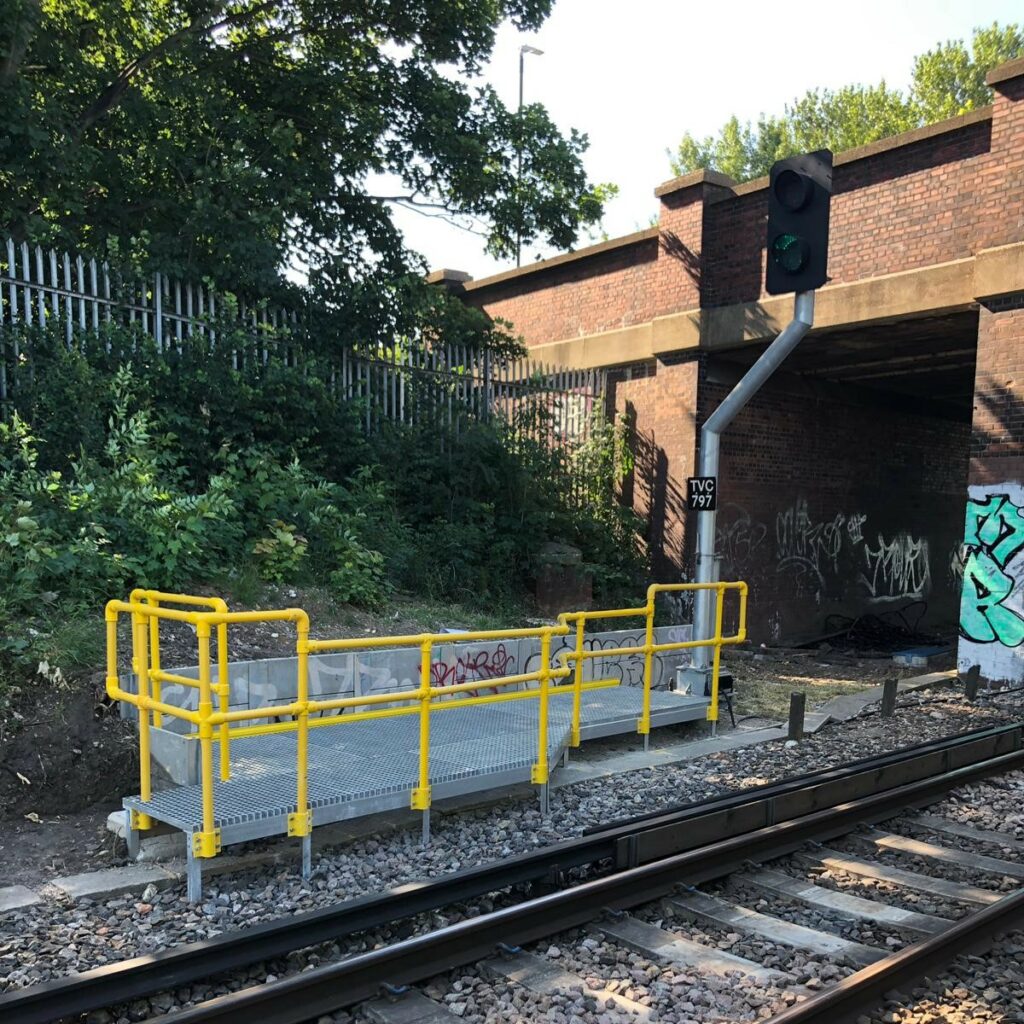
At Ezi Klamp, we specialise in delivering GRP platforms and marine access systems that are specifically designed for demanding coastal and offshore environments. Our GRP platforms are far superior to traditional alternatives, offering the strength and stability of steel with several additional benefits.
Our GRP marine platforms are available in various heights, lengths, and designs, so you can match the system to suit your exact specifications. They’re also modular in nature, meaning they can be easily extended or adapted as your requirements change. Plus, we can even assist with installation for more complex sites if needed.
Get in touch to discuss your requirements and we’ll help you find the right GRP access solution for your project.
FAQs
Are GRP platforms suitable for marine environments?
Yes, GRP platforms are suitable for coastal and marine environments because the material is naturally resistant to corrosion. Unlike steel, GRP will not rust or oxidise when exposed to seawater, making it a reliable solution for harbours, jetties, and offshore assets.
How do GRP platforms perform in saltwater conditions?
Seawater resistant platforms made from GRP perform exceptionally well in saltwater conditions. The material does not corrode or degrade when exposed to salt spray, tidal water, or coastal humidity, making it a highly durable option for marine access structures.
Are GRP marine platforms slip resistant?
Yes, GRP marine access systems include integrated anti-slip GRP grating that is designed to maintain traction in wet environments. GRP grating features an open mesh design that allows water to drain away quickly, helping to keep walking surfaces safe.
Do GRP platforms require maintenance in marine environments?
Corrosion resistant platforms made from GRP require very little maintenance compared to steel structures. GRP does not rust or corrode, helping to reduce the time and cost associated with ongoing maintenance and repair work.
Where are GRP marine platforms typically used?
GRP marine platforms are commonly used across a wide range of coastal and offshore infrastructure, including harbour and dockside access walkways, offshore maintenance platforms, coastal pumping stations, and inspection platforms near tidal zones.