Key takeaways:
Industrial perimeter protection helps to prevent vehicle collisions, protect critical infrastructure, and keep pedestrians safe in busy operational environments. Armco crash barriers, bollards, guardrails, and GRP fencing are all key examples of industrial perimeter protection that are specifically designed to create clear boundaries and control vehicle movement. Each system can also work together as a holistic safety solution to safeguard people, equipment, and infrastructure across your entire site.
Protecting the boundaries of your industrial site isn’t just about marking where your property begins and ends. Effective industrial perimeter protection plays a crucial role in safeguarding your people, protecting your equipment and infrastructure, and ensuring that your operations run smoothly.
In this guide, we explore the key types of industrial perimeter protection and where they are commonly used, so you can choose the right solutions for your site.
Key types of industrial perimeter protection
Armco crash barriers
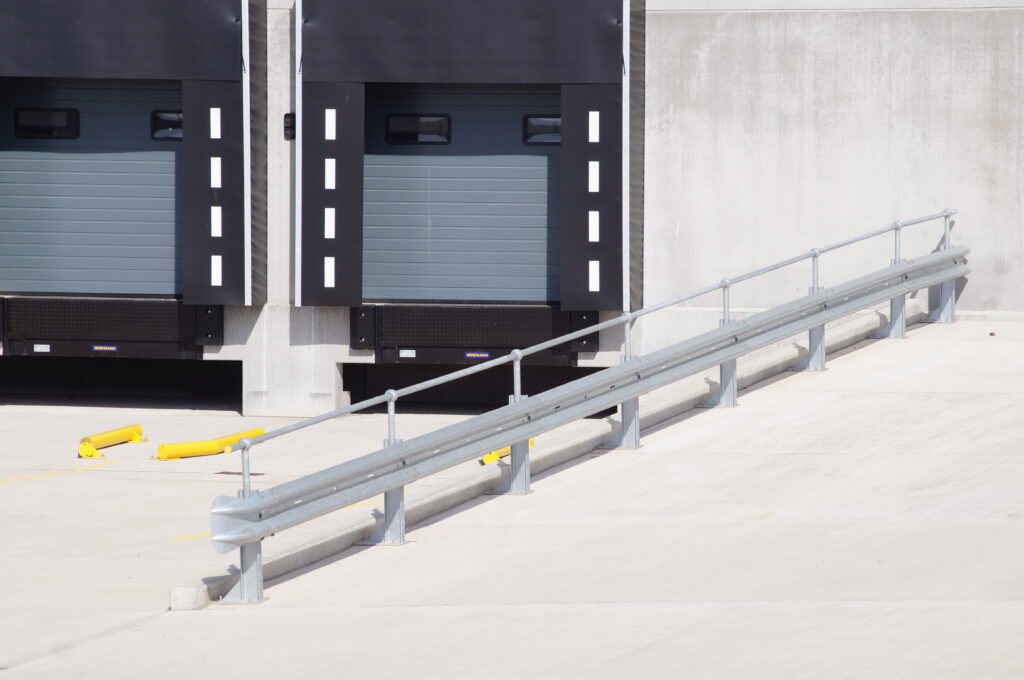
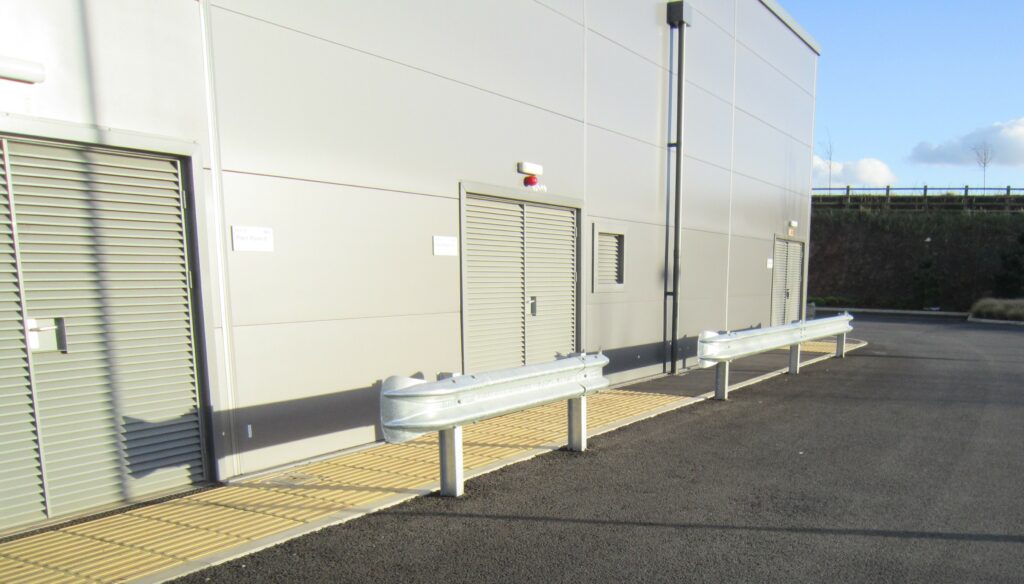
Armco crash barriers are one of the most widely used forms of safety barriers in industrial environments. They’re designed to absorb and deflect vehicle impacts, which prevents any collisions from damaging your buildings, machinery, and other critical infrastructure.
Armco crash barriers are typically used in areas that see regular vehicle movement, such as warehouses, loading bays, car parks, and service yards. They can be used to:
- Protect your warehouse racking and storage areas
- Shield your building corners and loading docks
- Separate pedestrian walkways from vehicle routes
- Safeguard your plant, pipework, and utilities
Our Armco crash barriers are manufactured from heavy-duty galvanised steel, offering exceptional strength and resistance to impact. Our system includes a full range of beams, posts, corners, and end sections, all designed with a modular format so they can be quickly installed and easily configured to suit your site’s specific layout.
Bollards
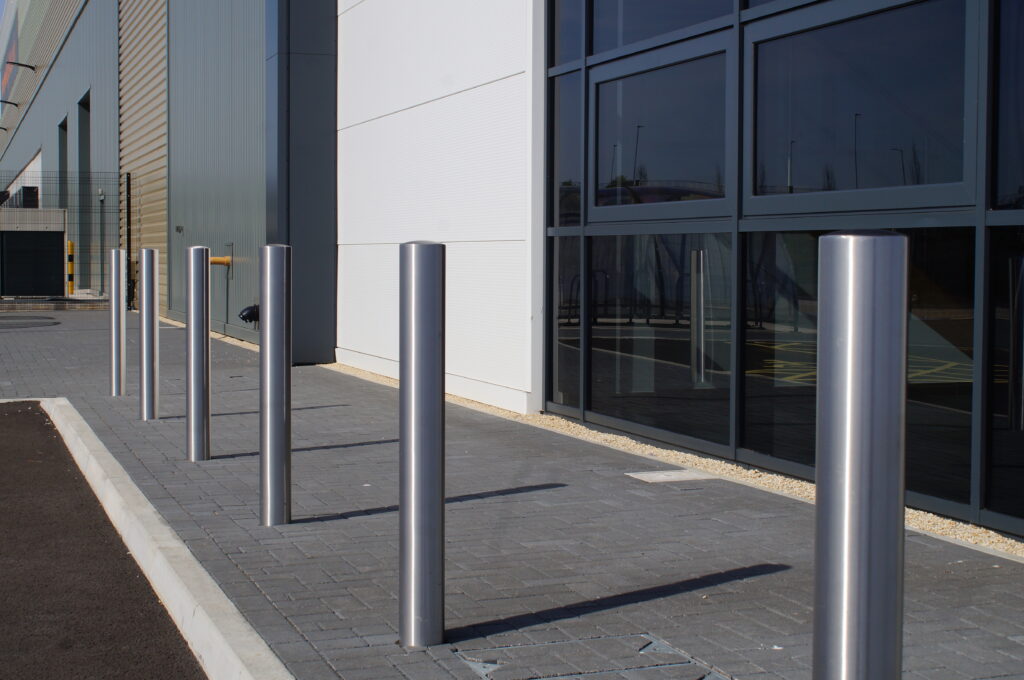
Bollards are another simple yet highly effective way to control vehicle movement and protect your vulnerable assets on-site. They’re installed as standalone posts and act as impact protection in areas where larger crash barriers may not be suitable.
Bollards are ideal for safeguarding entrances, doorways, pedestrian zones, and sensitive equipment. They can also be used to create controlled access routes and ensure that vehicles move safely through designated areas. Common uses include:
- Protecting building entrances and roller shutter doors
- Shielding EV charging points or electrical cabinets
- Preventing vehicles from entering pedestrian-only areas
- Protecting critical plant or control panels
Our industrial bollards are designed to provide robust, dependable protection for your site’s vulnerable areas. They’re manufactured from high-strength steel with an optional galvanised finish, helping to effectively protect and organise your premises’ vehicle routes, pedestrian areas, and restricted zones.
Guardrails
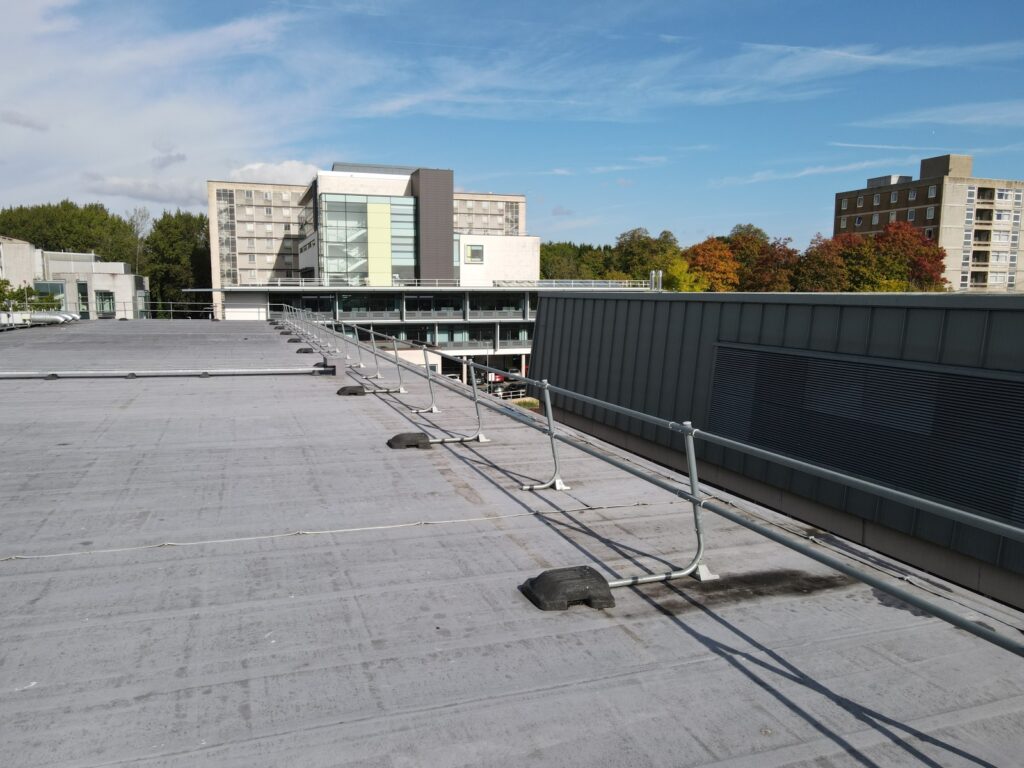
Like crash barriers and bollards, guardrails also play an important role in separating pedestrians from vehicles in busy industrial environments – however, they’re typically used as a lighter form of protection to clearly define safe walkways and operational routes.
If pedestrians and vehicles share the same space on your site, you can install guardrails to help:
- Define safe pedestrian walkways
- Create clear traffic routes for forklifts and site vehicles
- Protect your machinery and workstations from accidental contact
- Improve the overall organisation of your site
Our pedestrian guardrail systems are manufactured from durable, high-strength steel, with a galvanised finish as standard to protect the material from deterioration. Our standard panels are available in 1m or 2m length with or without a sight gap, and we can also supply bespoke raked, curved, or base-plated panels to suit your exact requirements.
GRP fencing
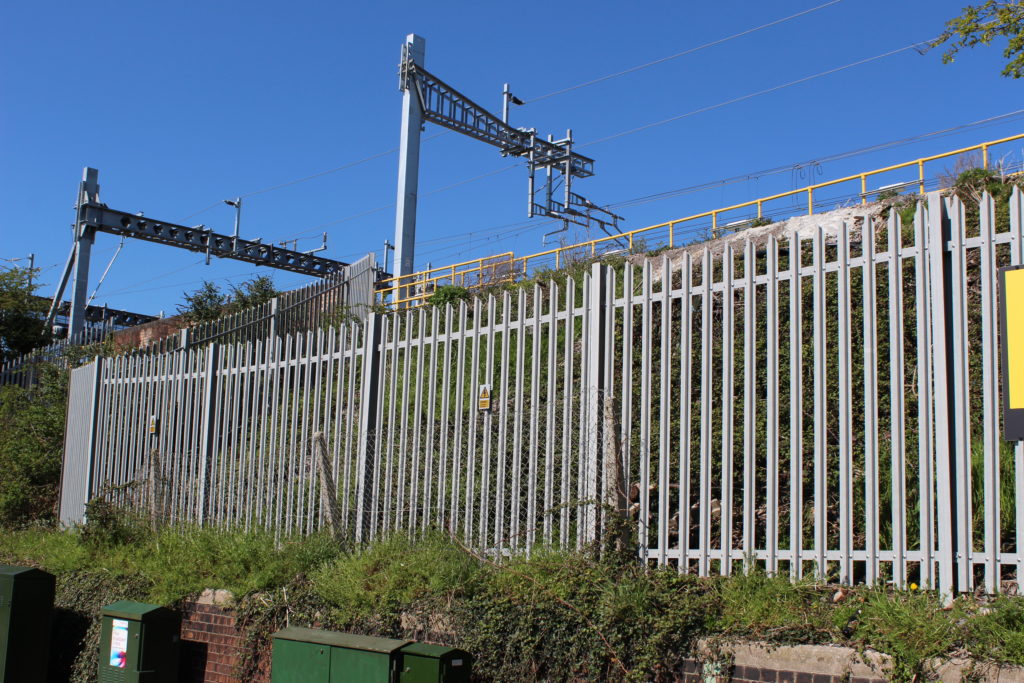
As well as safeguarding your infrastructure and personnel from vehicles, it’s vital that you have a robust fencing system installed to safely enclose operational areas.
GRP (Glass Reinforced Plastic) fencing has emerged as a superior alternative to traditional steel fencing, and it’s easy to see why. Here’s why GRP fencing is such a popular choice in industrial environments:
- GRP is completely resistant to corrosion, making it ideal for water treatment works, coastal sites, and chemical facilities
- GRP is also non-conductive and is safe to use around electric infrastructure
- Unlike steel, GRP will not rust or require frequent repainting, making it very easy to maintain
- GRP offers a long service life of 25+ years, with minimal maintenance requirements compared to steel
Our industrial GRP fencing gives you the strength of steel without any of the drawbacks. Our systems are up to 75% lighter than steel, which makes them easy to install without the need for specialist tools or extensive manual labour. Choose from a range of fence heights from 1500mm to 3000mm, plus bespoke gates and green or grey finishes to suit your site aesthetic.
Ezi Klamp: your industrial perimeter protection partner
At Ezi Klamp, we supply a wide range of safety barriers for industrial environments, including Armco crash barriers, bollards, guardrails, and GRP fencing. But we don’t just supply individual products – we help you design a holistic safety solution that will effectively protect your people and equipment from the specific hazards on your site. We offer a free take-off from drawing service to ensure the solution meets your exact requirements, and we can even assist with installation if needed.
Looking to improve your industrial perimeter protection? Get in touch to discuss your site’s safety requirements.
FAQs
What is the difference between Armco barriers and guardrails?
Armco crash barriers are designed to absorb and deflect vehicle impacts, making them ideal for protecting your buildings and infrastructure. On the other hand, guardrails are used to separate pedestrians from vehicle routes and define safe walkways across your site.
Where is GRP fencing typically used in industrial environments?
GRP fencing is commonly used in environments where corrosion and electrical risks are a concern, such as water treatment works, rail infrastructure, utilities, and coastal sites. Its non-conductive and corrosion-resistant properties make it an ideal solution for these environments.
When should bollards be used instead of crash barriers?
Bollards are ideal for protecting smaller, high-risk areas such as doorways, equipment, and pedestrian zones where full-length barriers are not practical. They’re often used in combination with crash barriers to provide targeted protection.
How do I choose the right perimeter protection system for your site?
When choosing a perimeter protection system, you need to consider your site’s layout, traffic levels, pedestrian movement, and environmental conditions. You may even need a combination of safety barriers to create a holistic safety solution.